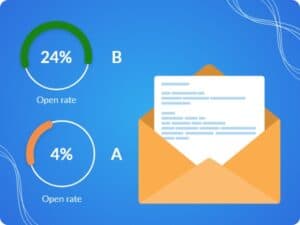
Recently, a SaaS founder shared his experience of struggling with outbound campaigns, where he invested in premium contact data, carefully defined their ideal customer profile, and built personalized email sequences. Yet despite all that effort, response rates remained low.
After carefully reviewing the campaign, they found that emails weren’t reaching the inbox.
Like this, many businesses assume low engagement means prospects are not interested in their business. But the real problem was poor email deliverability often prevents prospects from ever seeing the message.
If you are a B2B Marketing Manager or a SaaS founder wondering why your response rate is low and looking for ways to scale up your outreach effectively, this guide is for you.
I will explain what email deliverability is, why it matters, and the factors that affect inbox placement. By the end, you’ll understand the practical steps you can take to improve email performance in 2026.
Think of email deliverability as the bridge between your email and your audience. It determines whether your email successfully reaches your prospect’s inbox or ends up in a spam folder. Strong deliverability turns your outreach efforts into meaningful conversation, high engagement, and qualified business opportunities.
Imagine:
Here, your goal should be inbox placement where your prospects receive and engage your message.
Strong email deliverability impacts your lead generation, engagement and revenue growth. Mailbox providers such as Microsoft, Google, and Yahoo are continuing to strengthen spam filtering, and sender verification requirements.
As inboxes become more crowded, mailbox providers increasingly prioritize:
As a B2B marketing manager, it’s important to understand the difference between email delivery and email deliverability
Email delivery indicates whether the recipient’s server accepts your email while email deliverability shows if your email reaches the primary inbox.
So, the key point is to focus on the inbox placement, not only the delivery rates, and make sure that your emails have been seen by the recipient.
It is necessary to understand how these mailbox providers evaluate your emails. They use multiple signals to determine whether your message belongs to the inbox or spam folder.
Mailbox providers such as Gmail, Outlook and iCloud mail do evaluate your sending history. Every time you send an email, it has been analyzed if your emails consistently generate positive engagement and follow best practices; by this your reputation will improve. But if recipients often ignore, delete, or mark it as spam, your reputation will decline.
Key factors
Mail providers verify and confirm that your emails are legitimate and sent from your domain.
What makes authentication a critical part of email security?
Email spoofing, Phishing attempts, and cyber threats are the critical part of email security. If your email hasn’t passed these authentication protocols, mail providers may view your email as suspicious.
To avoid, you need to follow the three primary authentication standards
This SPF helps to identify which mail servers are authorized to send emails on behalf of your domain. It also prevents unauthorized senders from impersonating your business and builds trust with mailbox providers.
DKIM is DomainKeys Identified Mail adds a digital signature to your emails, enables receiving servers to verify your message has not been altered during transmission. It protects email integrity and confirms your content is authentic.
Domain-based Message Authentication, Reporting, and Conformance (DMARC) works with SPF and DKIM to provide instructions on how mailbox providers should handle unauthenticated emails. Additionally, it offers protection against domain spoofing and improves overall sender credibility.
If you correctly implement these standards, you’ll experience stronger inbox placement and enhanced email security.
How recipients interact with your emails is closely monitored by mailbox providers. If your content is relevant and valuable it creates a positive engagement.
Let’s understand how mailbox providers commonly evaluate:
Deletes without reading
Mailbox providers observe your sending pattern to identify suspicious activity. It is important to maintain consistent sending behavior and avoid sudden dropping off in email volume.
Here is some important sending behavior factors included:
Focus on a steady, responsible sending practice rather than aiming at a large-volume campaign with poor audience validation.
Strong email deliverability requires a combination of audience quality, technical set-up and ongoing optimization.
The foundation of email deliverability is domain authentication as it helps mailbox providers to verify your emails are legitimate.
Businesses should implement:
If you are a start-up, you need time to build trust with mailbox providers before sending large volumes of email.
I suggest some of the best practices for your domain warm-up:
These practices make your domain recognized by the mailbox providers as a trustworthy sender and reduce the chance of spam filtering.
To avoid bounce rates and maintain quality of your email list you should follow the healthy email list which is updated regularly.
Before starting your email marketing, segment your audience to deliver more targeted communication.
Common segmentation criteria:
Relevant emails and personalized message generate better inbox placement, higher engagement, and increased response rates.
Regular monitoring to identify potential problems can help you to avoid sender reputation declines.
There are key metrics to monitor:
Monitoring sender reputation allows you to identify email deliverability issues and maintain consistent campaign performance.
| Deliverability Challenge | Business Impact | Common Causes | How to Identify It | Recommended Solution | How ReachEngine Helps |
| Emails Landing in Spam | Reduced visibility and lower response rates | Missing SPF, DKIM, DMARC, poor sender reputation, spam-causing content | High delivery rates but low engagement | Configure authentication protocols, improve content quality, monitor reputation | ReachEngine performs authentication setup, inbox placement testing, and ongoing reputation monitoring |
| Low Open Rates | Fewer prospects entering the sales funnel | Weak subject lines, poor targeting, low sender trust | Open rates significantly below industry benchmarks | Improve segmentation, personalize subject lines, optimize send times | ReachEngine uses audience intelligence and campaign optimization to improve engagement |
| High Bounce Rates | Damaged sender reputation and reduced deliverability | Outdated, invalid, or unverified email addresses | Increasing hard bounce percentages | Regular list hygiene and contact verification | ReachEngine uses verified B2B contact data and audience validation processes |
| Poor Sender Reputation | Future campaigns increasingly filtered by mailbox providers | High complaint rates, spam traps, excessive email volume | Reputation monitoring tools show declining sender score | Reduce complaints, clean lists, improve engagement | ReachEngine continuously monitors sender reputation and adjusts campaign practices |
| Low Reply Rates | Limited lead generation opportunities | Generic messaging and lack of relevance | Emails are opened but receive few responses | Personalize content and align messaging with buyer pain points | ReachEngine develops industry-specific messaging frameworks based on audience needs |
| Domain Blacklisting | Significant loss of inbox placement | Spam complaints, poor list quality, excessive sending | Emails consistently blocked or rejected | Remove harmful practices and repair domain reputation | ReachEngine follows deliverability best practices to reduce blacklist risks |
| Inconsistent Lead Generation | Unpredictable sales pipeline growth | Irregular outreach and lack of optimization | Fluctuating campaign performance month-to-month | Create repeatable outreach processes and continuous testing | ReachEngine manages end-to-end campaign execution and optimization |
| Low Engagement from Decision-Makers | Difficulty generating qualified opportunities | Poor audience targeting | High email volume but low meeting generation | Improve ICP definition and audience segmentation | ReachEngine targets decision-makers using firmographic and intent-based audience intelligence |
| Deliverability Decline After Scaling | Growth campaigns become less effective | Rapid volume increases without proper domain warm-up | Engagement drops as sending volume grows | Implement gradual scaling and warm-up strategies | ReachEngine manages domain warming and scalable outreach infrastructure |
| Lack of Campaign Visibility | Difficulty measuring ROI | Limited reporting and analytics | Inability to connect campaigns to business outcomes | Track performance metrics and attribution data | ReachEngine provides transparent reporting focused on leads, meetings, and pipeline impact |
Email deliverability requires continuous monitoring, audience segmentation, technical expertise, and ongoing optimization. This consistent maintenance can be highly challenging.
At this stage, you should approach a platform that offers more than just sending emails. ReachEngine is an email marketing service provider that offers strategic insight, audience intelligence, campaign execution, and email deliverability solutions to improve outreach performance.
ReachEngine manages deliverability through:
ReachEngine’s goal is to create measurable business growth through strategic outreach performance and email deliverability services.
Behind every email campaign is a business trying to reach a real person. Where a business owner invests in growth, a sales team expect to start a conversation, and a marketing executive is trying to create business opportunities.
Email deliverability is not just about technical setup. It should ensure your message reaches people who can benefit from it.
If you’re investing budget and time into email marketing outreach, working with email deliverability experts like ReachEngine can help improve inbox placement, higher engagement, and long-term growth.
Email deliverability services help improve inbox placement, strengthen sender reputation, and provide ongoing monitoring and technical support to maximize campaign performance.
Yes, email authentication verifies your email are sent from a legitimate domain, improves sender trust and creates inbox placement opportunities.
Most common causes include poor sender reputation, low engagement, missing authentication, poor list quality and spam complaints.
You can improve email deliverability by implementing SPF, DKIM, and DMARC authentication standards, maintaining updated contact database, and regular monitoring of sender reputation.
A good email deliverability rate is 95% and above. This indicates your emails successfully landed in the primary inbox rather than falling into spam folder.
Stay updated with the latest tips and strategies. Get Additional discounts and alerts on offers
Don't forget to share this post!
🤔 Have a question?
If you have a question, feel free to contact our support team by creating a ticket from your account. If you don’t have an account yet, you can contact us here.

Enter Your Details